Saturday, November 2, 2013

Hessian Miter Cap


Hessian Miter Cap

Date: 1775
Catalog #: 1978.2180.01    Accession #: 1978.218
Credit: Division of Military History and Diplomacy, National Museum of American History

Dimensions / Weight

Dimensions: 9.25" H x 7" W x 8.75" D

Physical Description

Cloth body with brass fittings and a cap plate. The straw colored cloth matches the regimental facings on their uniforms. The brass finial, supports and crown are stamped with a variety of military symbols. The brass cap plate is stamped with the Hessian lion. The lion is rampant, rearing on the left hind leg with the forelegs elevated, the right above the left, and usually with the head in profile and holding a sword. The sword is engraved with the initials “FL” forFriedrich Landgraf, the ruler of Hesse-Cassel.

Specific History

The Fusilier Regiment von Knyphausen was one of the regiments of the Second Division of troops from the German principality of Hesse-Cassel. It served as an auxiliary troop to the British Army during the American Revolution. Fusiliers were light infantry regiments in German armies and their distinctive miter cap differentiated them from other units.

General History

The miter is a ceremonial, peaked headdress.

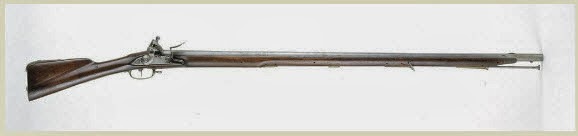
Hessian Musket


Date: 1775
Catalog #: NM207    Accession #: 319944
Credit: Division of Military History and Diplomacy, National Museum of American History

Dimensions / Weight

Dimensions: 8" H x 58.5" W x 2.5" D

Physical Description

German musket, .77 caliber.

General History

King George III used German soldiers to bolster his ranks. Many of these mercenaries came from Hesse-Cassel and were called “Hessians.” Their arms were stout German muskets that bore a similarity to the British Brown Bess, though their barrel bands resembled the French Charleville.


Thursday, March 7, 2013

Memoirs Relative to the Campaign of 1788, in Sweden


Memoirs Relative to the Campaign of 1788, in Sweden is a military memoir attributed to Charles of Hesse-Kassel (Karl, Landgrave of Hesse-Kassel), describing his participation in the late 18th-century conflict between Sweden and Russia known as the Russo-Swedish War (1788–1790).

The work focuses on the campaign operations in Sweden during 1788, when Charles of Hesse-Kassel served in a high command role within the Swedish military system. It provides a first-person or near-contemporary account of strategic planning, troop movements, and the challenges of conducting military operations in the Scandinavian theater.

A central theme of the memoir is the coordination and command difficulties within the Swedish army, including logistical constraints, communication problems, and the complexities of managing multinational influences within the officer corps. It reflects the broader tensions of eighteenth-century warfare, where aristocratic commanders often operated across different European military systems.

The narrative also highlights the operational environment of the Swedish campaign, including terrain, supply issues, and naval considerations that shaped military decisions in the Baltic region. These factors played a significant role in limiting large-scale engagements and influencing the war’s outcomes.

In addition to its military content, the memoir provides insight into the perspective of a German princely commander serving in a foreign army, illustrating the interconnected nature of European aristocratic military service in the late 18th century.

Thursday, January 10, 2013

"German Villages in Crisis: Rural Life in Hesse-Kassel and the Thirty Years' War, 1580-1720" by John C. Theibault


"German Villages in Crisis: Rural Life in Hesse-Kassel and the Thirty Years’ War, 1580–1720" by John Theibault is a detailed study of rural society in the Landgraviate of Hesse-Kassel, focusing on how village life was shaped by long-term structural conditions and the impact of the Thirty Years’ War.

The book examines the village as a central social and cultural institution in the German countryside, showing how rural communities were shaped by competing interests involving peasants, local authorities, church institutions, and regional administration. It argues that these tensions both influenced and were transformed by the experience of war.

A major focus is the impact of the Thirty Years’ War on rural communities, described as one of the greatest catastrophes of early modern Germany. The study shows how villages experienced destruction, disruption, and demographic change, while also emphasizing that wartime outcomes were deeply influenced by pre-existing social and economic structures.

The author extends the chronological frame from 1580 to 1720 in order to place the war within broader processes of continuity and recovery. This long-term perspective shows that village conditions after the war were shaped not only by wartime devastation but also by earlier patterns of land use, governance, and social organization.

The study draws on extensive archival sources, including fiscal records, ecclesiastical and court documents, official correspondence, and material evidence from the Werra region. These sources allow for a reconstruction of everyday rural life and the functioning of local institutions.